
Shoalhaven’s Missing Middle: Why POLICY IN FOCUS: Developers Aren’t Building the Housing Council is Banking On
financial viability is the overwhelming barrier to delivering missing middle housing in Shoalhaven.

Policy in Focus: What the Big Picture Means for Shoalhaven
From time to time I’ll step back from the day-to-day issues of council meetings, development applications, and local controversies to look at the bigger picture. These posts connect national research, demographic trends, and long-term policy questions to life here in Shoalhaven.
Not everyone will find this material immediately relevant, but it helps put our local debates in context — and shows how broader forces shape the choices council makes (or avoids). If you’re mainly here for the week-to-week council coverage, feel free to skip. But if you want to see how Shoalhaven fits into the wider story, read on.
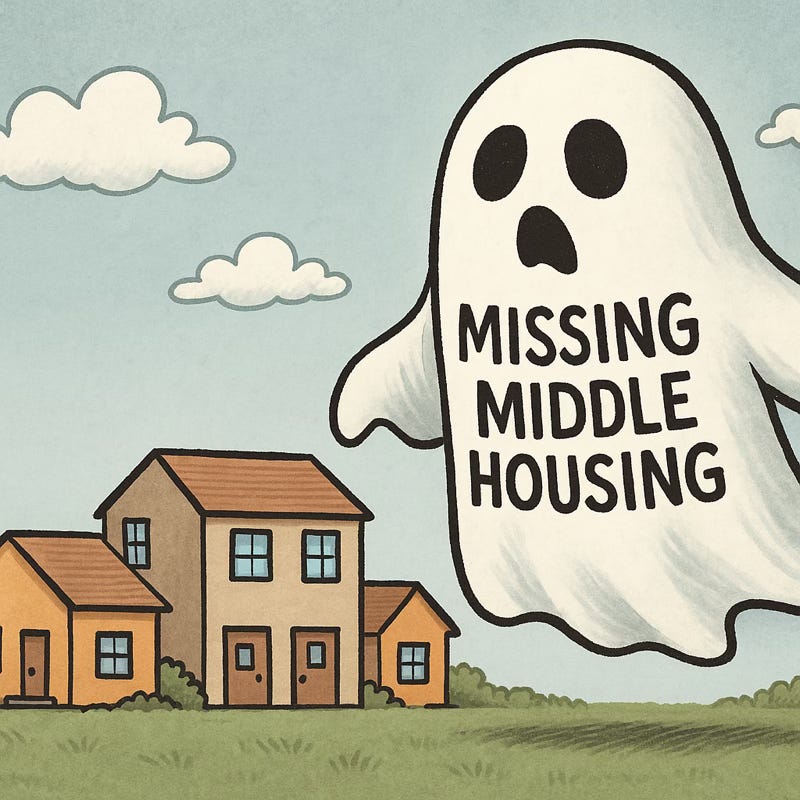
Shoalhaven Council has put a lot of weight on its Affordable Housing Strategy and the promise of “missing middle” housing — the townhouses, dual occupancies, and small-scale apartments that are supposed to bridge the gap between detached homes and high-rise towers.
But the reality is very different from the glossy strategies. Developers are hesitant to build, financial models show most projects don’t stack up, and Council’s own processes are seen as slow, unpredictable, and politically fraught.
The result? On paper, hundreds of new homes are approved — yet shovels never hit the ground.
The Council’s final strategy has incorporated some industry feedback, such as fast-tracking density bonuses and DA support, but the hard truth remains: without tackling costs, financing hurdles, and community opposition, Shoalhaven is unlikely to see the housing diversity the strategy promises.
This article unpacks the facts from Council’s own research papers, industry submissions, and the final strategy — and asks whether Shoalhaven’s housing policy is really a roadmap to affordability, or just another document gathering dust while the housing crisis deepens.
Observed Development Activity and Pipeline
Analysis of the development pipeline since 2021 reveals that while developers are proposing diverse housing, there is significant hesitation to commence construction, especially for high-density projects. The market shows a clear preference for medium-density housing over high-density apartments.
Significant Hesitation to Commence Construction: A clear majority of proposed medium and high-density dwellings (66% combined) have been approved but are not yet under construction. Developers are reportedly waiting for market conditions to improve or are attempting to sell their sites with the development approval in place.
Medium-Density is More Viable than High-Density: The market is currently more attractive for medium-density projects (such as dual occupancies, multi-dwelling housing, and manor houses).
As of March 2024, 28 medium-density dwellings were either completed or under construction.
In contrast, no high-density projects (residential flat buildings) from development applications lodged since 2021 have commenced construction. In fact, developers have chosen to abandon proposals for 38 approved high-density dwellings.
Focus on High-Value Locations: Developers concentrate their proposals in areas with strong local draws, such as the employment hub of Nowra or high-amenity coastal areas like Mollymook, Ulladulla, and Huskisson. High-density projects are proposed almost exclusively in these high-value areas, where developers are more confident of market demand and profit.
(Primary Source: Dwelling Diversity Research Paper, diversity.pdf)
Developer Feedback on Market Conditions and Barriers
Stakeholder consultations with local developers, agents, and consultants reveal that financial viability is the overwhelming barrier to delivering missing middle housing in Shoalhaven.
1. Financial Viability is the Primary Obstacle
The main reason for the lack of development is that most medium and high-density projects are not financially viable in the current market.
High Construction and Land Costs: Escalating construction costs, which rose 5.8% in the year preceding the study, have severely eroded profitability. Feasibility testing showed a hypothetical townhouse in Nowra would cost nearly $986,000 to build and require a sale price over $1.18 million to be profitable. Land consolidation costs are also a barrier, with developers often needing to pay a 20-30% premium to amalgamate sites for infill projects.
Competition from Cheaper Detached Houses: The abundance of existing detached houses creates a “price floor,” making it difficult to sell new medium-density products. For a similar price, buyers can often purchase a detached house with more land, making a new townhouse less attractive unless it offers exceptional amenity like ocean views. For example, the hypothetical townhouse needing a sale price of $1.18 million must compete with the cheapest quartile of detached houses in Nowra, which sell for $590,000.
Difficult Financial Environment: High interest rates and tighter lending conditions make it hard for developers to secure financing and for buyers to secure mortgages. Achieving the required presales targets to obtain a loan is a major challenge.
(Primary Sources: Dwelling Diversity Research Paper, diversity.pdf; Affordable Housing Feasibility and Contributions Testing Research Paper, house testing.pdf)
2. Industry Appetite and Capacity
Despite the financial hurdles, stakeholders indicated a continued interest in pursuing denser development where it is viable.
Preference for Medium-Density: The interest is mainly in the medium-density market (townhouses, dual occupancies), as these projects can be built using the existing skill set of the local housing industry.
Limited Capacity for High-Density: Developers noted a local shortage of builders with the skills and capacity to deliver more complex and large-scale residential flat buildings, which increases risk and cost.
(Primary Source: Dwelling Diversity Research Paper, diversity.pdf)
Developer Frustration with the Planning and Assessment Process
A consistent and significant theme from stakeholder consultations was that the Council’s development assessment (DA) process acts as a major deterrent to investment.
Unpredictable and Slow: The local assessment process was described by developers and consultants as “largely unpredictable,” with extended timeframes and inconsistent decisions. This adds significant risk and cost, making other council areas with faster and more predictable outcomes more attractive for investment.
Political and Community Opposition: Stakeholders reported that density is often reduced late in the planning process following community opposition. This undermines project viability and weakens the planning justification for higher-density proposals.
(Primary Sources: Dwelling Diversity Research Paper, diversity.pdf; Submission Guide, sub guide.pdf)
Response to Specific Council Interventions
Submissions on the Draft 2024 Affordable Housing Strategy provide direct feedback from developers and industry bodies on the proposed actions.
Affordable Housing Contributions Scheme (Action 1.2): The response was mixed. The Property Council of Australia raised concerns about the negative impact on development feasibility. However, the Urban Development Institute of Australia (UDIA) commended the proposed cautious approach, noting that a delayed introduction allows developers to factor the cost into land acquisition, limiting the impact on viability.
DA Support (Action 1.5, formerly 2.6): This was strongly supported by the industry as a direct response to their frustrations. The UDIA, Property Council, and Southern Cross Housing all endorsed the action, suggesting improvements like appointing a dedicated liaison officer and making it a higher priority. In response to this feedback, Council elevated this action from a medium-term to a short-term priority.
Density Bonuses (Action 2.3): This proposal is strongly supported as a way to improve financial viability. Industry bodies requested consultation on the details of any proposed bonuses to ensure they are effective.
Community Education Campaign (Action 1.8, formerly 2.8): Industry and Community Housing Providers strongly support this action to help counter community opposition and stigma. They offered to collaborate with Council on the campaign. In response to feedback on its urgency, Council also elevated this from a medium-term to a short-term priority.
(Primary Source: Submission Guide, sub guide.pdf)
Reference Material Links
The information in this response was drawn from the following key source documents you provided:
diversity.pdf(Dwelling Diversity Research Paper): This document is the primary source for the analysis of the development pipeline, market conditions, feasibility testing, and detailed stakeholder feedback on the barriers to delivering medium and high-density housing.You can find this information in sections
3.0 Development pipeline,4.0 Development feasibility analysis,6.0 Stakeholder consultation, and7.0 General barriers to diversity.
sub guide.pdf(Submission Guide): This document is the primary source for the direct responses from developers, industry bodies (like the Property Council and UDIA), and Community Housing Providers to the specific actions proposed in the draft 2024 strategy.This feedback is located in section
3. Feedback on Actions.
house testing.pdf(Affordable Housing Feasibility and Contributions Testing Research Paper): This document provides the detailed financial modeling and market research that underpins the conclusions about development viability, construction costs, and the feasibility of an affordable housing contributions scheme.Key data can be found in sections
4.0 Greenfieldand5.0 Infill.
preview_latest_final_version_pdf.pdf(Shoalhaven Affordable Housing Strategy 2024 - Final Version): This document contains the final list and timing of actions that Council adopted after considering the feedback from stakeholders mentioned in thesub guide.pdf.