
Reading Between the Lines: Shoalhaven Council Meeting 9 September 2025
Patricia White and Councillor Selena Clancy declared “less than significant non-pecuniary interests” - seriously????

The minutes (link here) of Shoalhaven City Council’s 9 September meeting reveal more than just the decisions recorded. Beneath the motions and resolutions lies a story of political manoeuvring, strategic choices, and recurring distractions that shape how this council operates.
1. Political Undercurrents and Motives
The most striking undercurrent was the CEO recruitment process. Both Mayor Patricia White and Councillor Selena Clancy declared “less than significant non-pecuniary interests” because they knew one of the candidates, but crucially, both stayed in the room and voted . This illustrates the political grip of the Shoalhaven Independent Group (SIG) bloc: the selection process was shepherded by councillors aligned with the Mayor, ensuring tight control over one of the most strategically important appointments in local government.
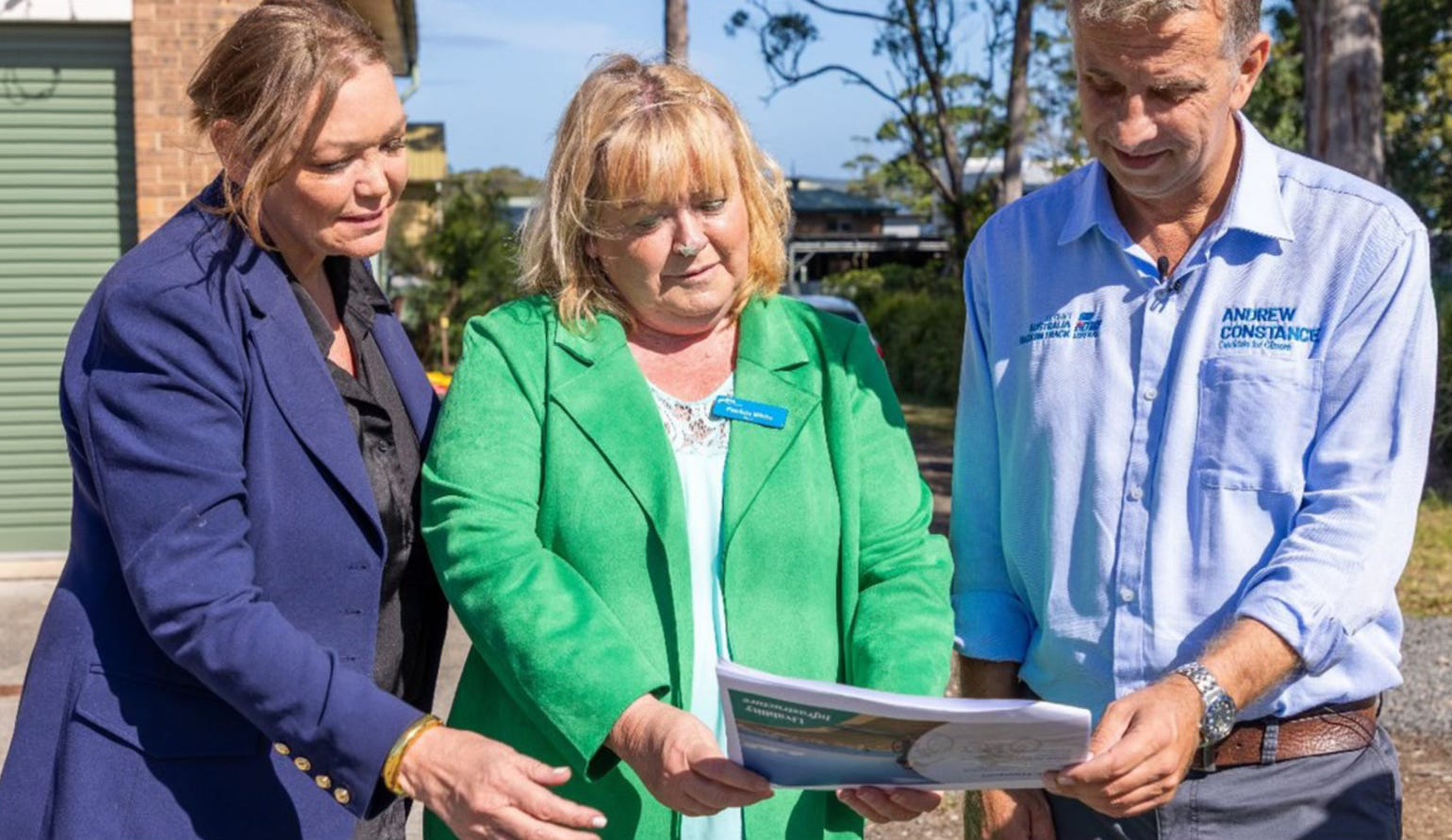
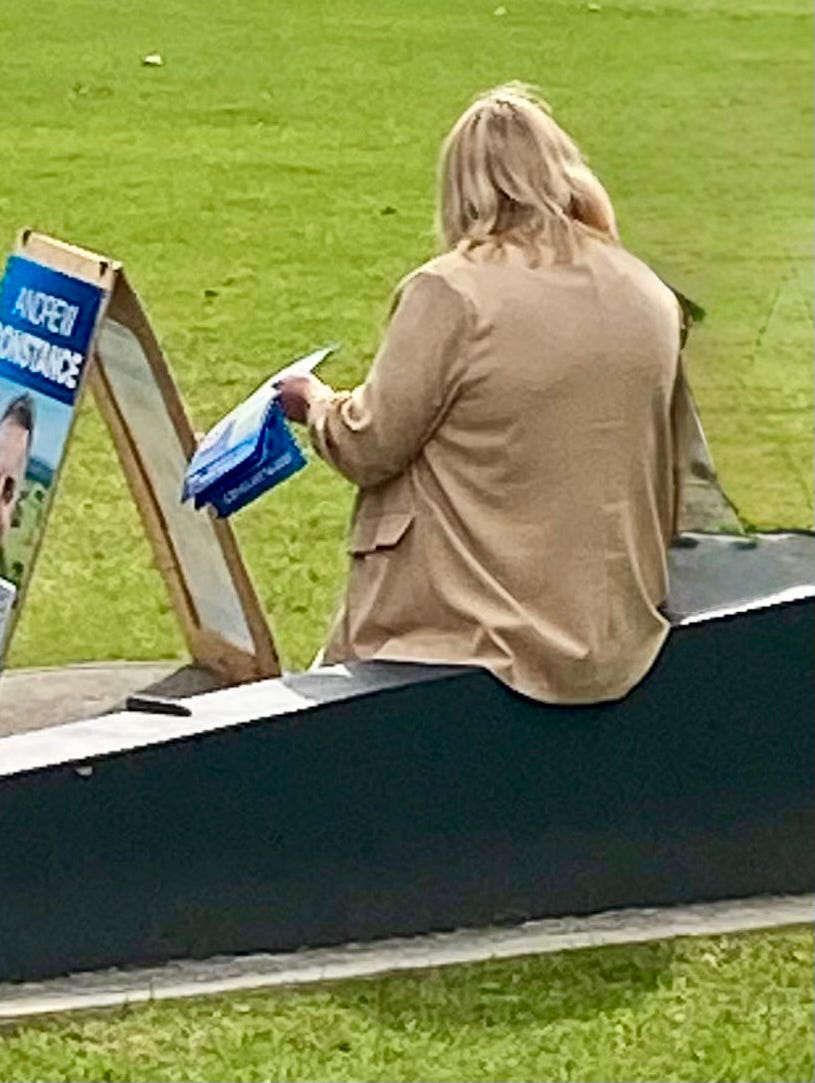
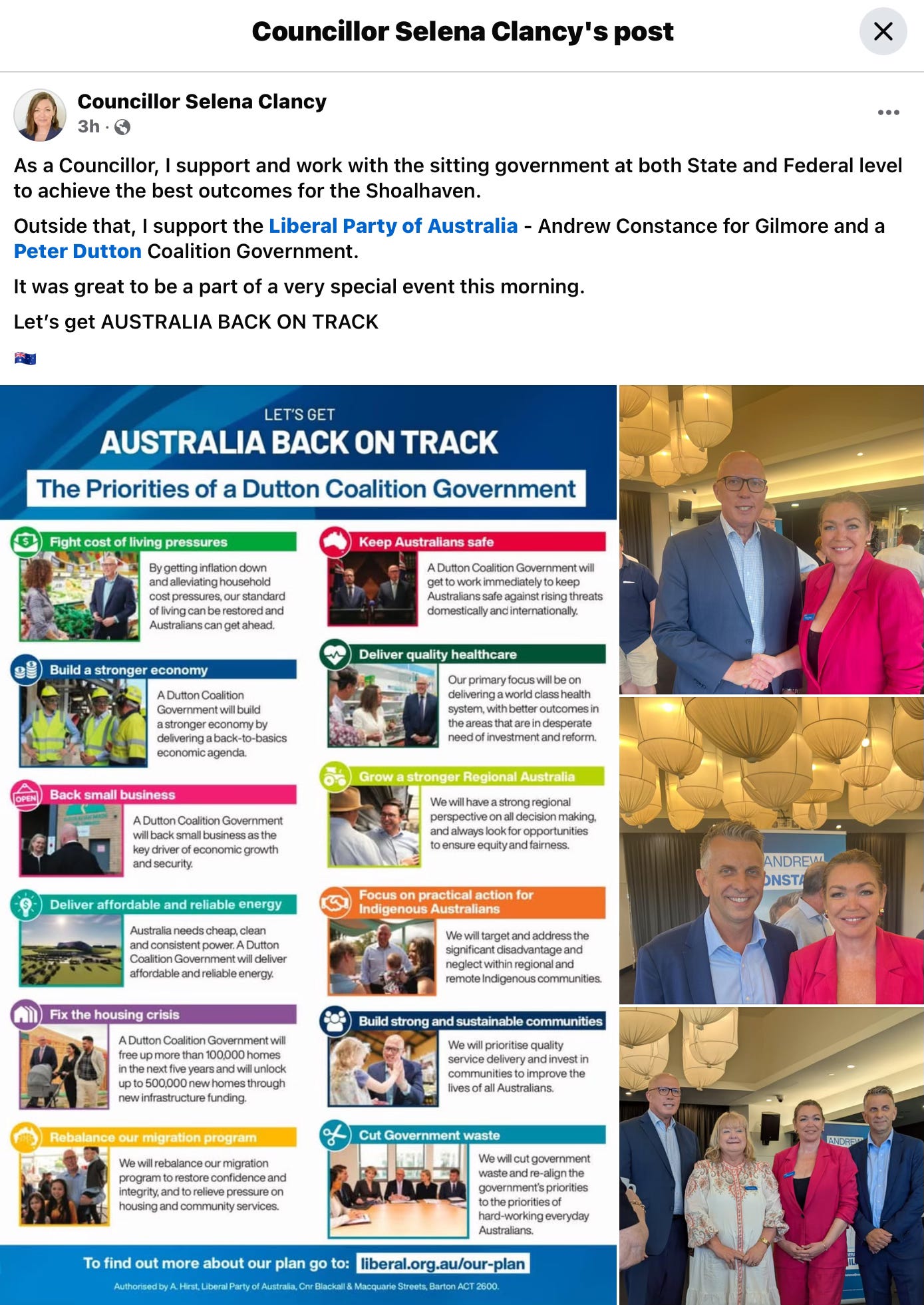
Less than significant - wow. Both White and Clancy campaigned for Constance, and it is rumored (not confirmed) that the Mayor had a photo of Constance on her desk.
There were clear maneuvers to do what looks like a “SIG fix” on the selection committee with the removal of Cr Norris.
This looks as “dodgy” as hell, in my opinion.
Another telling moment came with development matters. On the Bamarang DA (DA25/1448), we saw a split: SIG-aligned councillors carried the vote against opposition from progressives (Tribe, Norris, Boyd, Krikstolaitis) . That division wasn’t about planning merit alone—it was about bloc discipline versus independent scrutiny.
The withdrawal of a rescission motion on Berry’s rural development policy also hints at manoeuvring: councillors Kemp, Casmiri and Proudfoot pulled back, likely because the numbers weren’t there, as that motion would throw the cat into the finance committee that are made up of very strong SIG people who oppose the development, the cost may well have been too high for Trish. This was political damage control.
2. Strategic Issues and Depth of Outcomes - when strategy sounds like it but delivers nothing of substance
A few items had genuine strategic weight.
Cost Shifting (CL25.281): Council formally acknowledged the LGNSW report on cost shifting to local government and resolved to lobby state leaders . Council resolved to note the findings of the LGNSW report on cost shifting for the 2023/24 financial year, to place the report on its website, and to write to the Premier, Treasurer and Minister for Local Government urging reform and funding . On its face, this is a routine, symbolic motion—but it is one of the few that gestures toward the real structural pressures facing councils across NSW.
The deeper problem is political. A major driver of anxiety around cost shifting is the fear that it forces rate rises, which directly clashes with the campaign slogans of parties like the Shoalhaven Independent Group (SIG). At the last election, SIG repeatedly promised no rate increases, a line that plays well at the ballot box but collides with financial reality. When state-mandated costs are transferred onto councils—whether in planning, compliance, or service delivery—someone has to pay. And without tax reform at the state level, the only lever available locally is the rates bill.
It is also important to remember that local government is not a third tier of government, but a creation of the State of NSW under the Local Government Act 1993. Cost movements between state and council budgets are not fundamentally different from reallocations between state departments. The end result is that the cost still falls on the public purse. The only real distinction is whether it is collected through state taxation—generally a broader and fairer system—or through the blunt instrument of council rates, which are narrow, regressive, and poorly matched to the scale of modern service delivery.
So while council’s decision to lobby the State is sensible, the politics surrounding it are layered with hypocrisy. Councillors cannot campaign on “no new rates” while simultaneously acknowledging that cost shifting is eroding council budgets. In the end, the bill arrives one way or another—whether labelled as tax or as rates.
Staff Benchmarking and Organisation Chart (CL25.283): Council requested changes to its Delivery Program and Operational Plan to provide greater transparency on services, delivery methods and costs by July 2026 . Council resolved to receive and note the report on staff benchmarking and the organisation chart, and to request changes to its Delivery Program and Operational Plan aimed at delivering greater transparency to the community about services, delivery methods and costs by July 2026 .
On paper, this looks significant—if genuinely carried through, it could give residents a clearer view of how their rates are spent and what value they get in return. But experience tells us that such “transparency” exercises often collapse under their own weight once uncomfortable truths begin to emerge.
It also reveals much about the current politics of the chamber. For months, the Shoalhaven Independent Group (SIG) councillors have been preoccupied with operational issues—the domain of staff, not councillors under the Local Government Act. Cr Jason Cox, in particular, has focused almost exclusively on staffing and operational questions, while the SIG bloc more broadly has shown little appetite for genuine strategic leadership. The very name of this item—“organisation chart”—reflects that fixation.
One could read this paper as a warning shot from the Acting CEO, reminding councillors not to keep crossing into operational territory. It highlights the paradox: councillors claim to want greater clarity, yet they repeatedly undermine council’s ability to focus on strategy by dragging debates into matters that should be left to the administration.
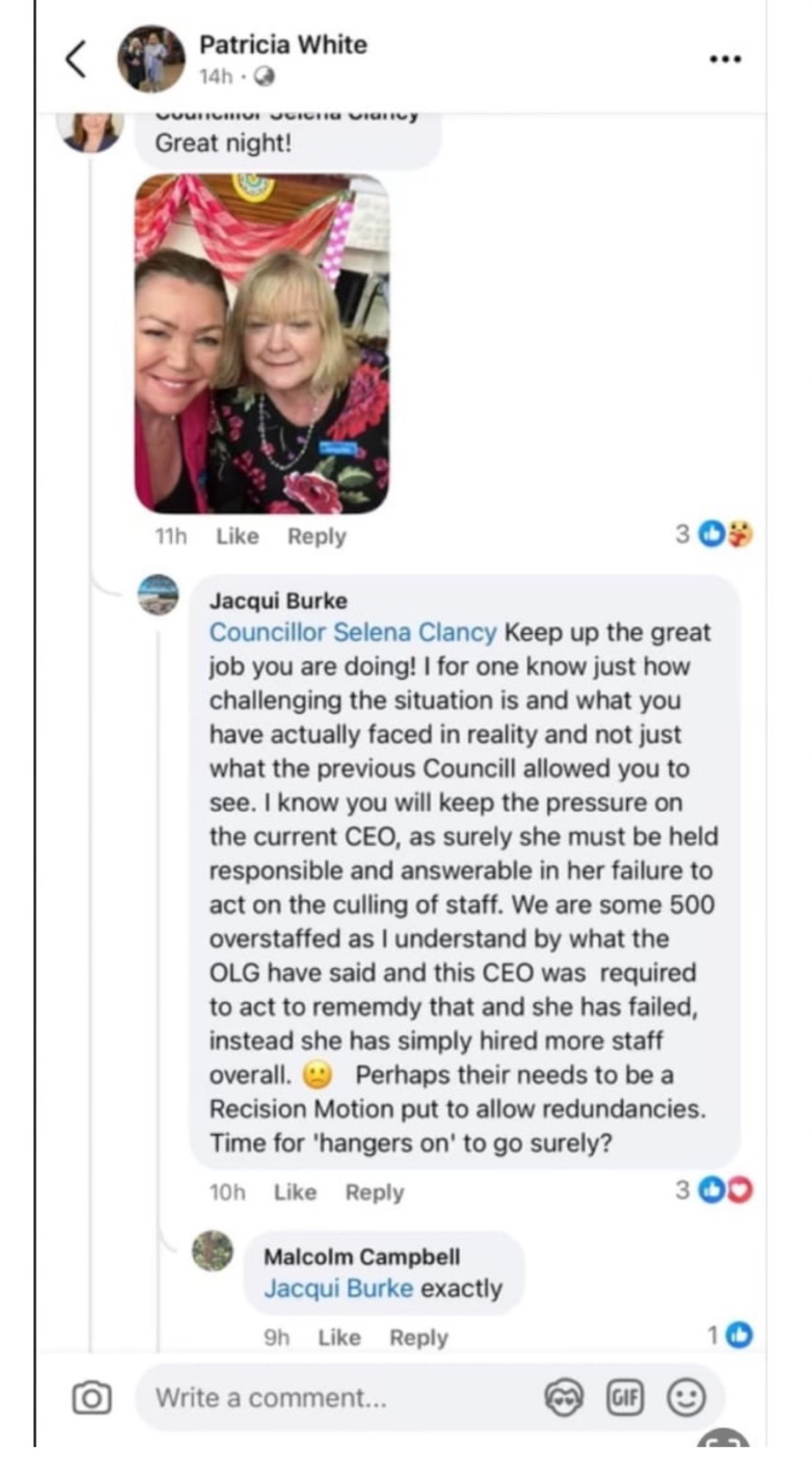
The hypocrisy is stark. During the last election campaign, SIG candidates and their supporters were howling for massive staff cuts, and Mayor White subsequently hand-picked the Finance Committee—stacked with loyalists—at her complete discretion. That committee has been the central forum for driving reductions in staff, eroding capacity, and framing it all as “efficiency.” Now, the same bloc presides over a resolution demanding transparency about service delivery and capacity. It is the very definition of double-speak: cut staff and then ask why services are under pressure.
This motion is less about true transparency than it is about politics. It enables SIG councillors to look like they are holding the system to account, when in fact their own decisions and rhetoric have created the instability that makes service transparency harder to achieve.
Disability Inclusion (CL25.282): At first glance, the motion on disability inclusion looks positive: council resolved to prepare a report on how many staff with disability are employed, how the Disability Inclusion Action Plan is tracking against its targets, and whether opportunities exist to partner with organisations like Flagstaff . It reads as constructive, forward-looking, even compassionate.
But the reality is that it achieves very little of anything new. The resolution does not commit council to action, resourcing, or measurable outcomes. It is, in essence, another “note and report back” motion—adding to the already long list of reviews and studies that rarely shift the dial for people living with disability in the Shoalhaven.
The motion was championed by Councillor Bob Proudfoot, who never misses the opportunity to remind the community of his compassion and social conscience. Yet it sits uneasily alongside his role as a central figure in the reduction of staff numbers since the SIG bloc secured its majority. Through his position on the so-called Finance Committee, which has functioned more as an advisory body driving cuts than as a forum for genuine fiscal reform, Proudfoot has been instrumental in supporting measures that have hollowed out council’s workforce.
The contradiction is glaring: on one hand, a public performance of compassion; on the other, steady support for the very staff reductions that undermine council’s capacity to deliver disability inclusion in practice. What Shoalhaven needs is not more symbolic motions, but a workforce and culture capable of embedding inclusion into every layer of service delivery.
In contrast, the CEO appointment process was conducted behind closed doors, with resolutions confirming a five-year contract, full private-use vehicle provisions, and a leadership development program . The secrecy and block-voting suggest the outcome was effectively pre-determined. The “whole council review” of other candidates, if needed, is more safety valve than genuine openness.
3. Operational Distractions and Wasted Time
Too much of the meeting remained bogged down in matters that sit firmly in the operational domain of staff, not councillors.
Sanctuary Point Shopping Centre waste storage (CL25.286): Councillors debated fencing and waste storage compliance, amending motions about whether council or shop owners should seek grant funding . These are the kind of compliance tasks officers are empowered to handle under the Local Government Act—councillors turning them into floor debates shows a council easily distracted from bigger policy questions.
Routine leases and licences (CL25.287, CL25.288): These were passed en bloc, but they highlight how much council meeting time is still occupied by administrative matters that could be delegated.
This pattern reinforces a deeper issue: Shoalhaven Council’s chamber is too often used for operational tinkering rather than strategic leadership.
4. Voting Patterns
Most items were carried unanimously, but the Bamarang DA stands out.
For approval with conditions: Clr Clancy, Kemp, Casmiri, Dunn, Cox, Wilkins, Proudfoot.
Against: Mayor White, Tribe, Norris, Boyd, Krikstolaitis .
This division shows the SIG bloc, that includes “Patsy” Clancy, voting as a unit, with progressives and Tribe/Labor bloc councillors dissenting. On other matters—financial statements, compliance reports, even cost shifting—the council presented a united front.
Conclusion
The September meeting once again showed Shoalhaven Council’s dual character: unity when the stakes are low, bloc discipline when the stakes are high. Strategic issues like cost shifting and staff transparency were nodded through, but operational distractions still dominated valuable chamber time.
And on the defining matter—the CEO appointment—the outcome was tightly managed by the SIG bloc, with limited transparency. For a council under financial and governance stress, this was a night that reinforced control rather than opening space for accountability.
Please share this with 2 friends who care about Shoalhaven.
If you get value from this post and you want to help me with information applications to get to the bottom of issues, you can donate here.
Thank you for considering this, the posts will always be free - but I could do with some help :)
Here are the current applications to council, seeking documents. At the moment I have one matter before NCAT. I will fight for transparency.
Disclaimer: This article provides analysis and commentary based on publicly available information and council transcripts. It does not make allegations of misconduct by any individual. Readers should verify details independently before drawing conclusions.
Here is a quick disclaimer, or explainer on the use of AI in the Eye.
I encourage you to take up your democratic right and engage with councillors, here are the contact details - send them questions or comments, text is best as they tend to ignore emails.